
Parallel Universe
In the year 2000 I was attending a family reunion at my mother’s house in southeast Iowa. It was a hot July day, and everyone was outside on the lawn enjoying the shade of the big River Birch while chatting and drinking iced tea. A lot of people had come that summer of 2000, including my Great Aunts from Florida, Missouri, and other parts unknown. I didn’t really know these aunts. They were in their upper 80’s and 90’s but as spry and sharp as one can imagine, with clear blue eyes to match their blue hair. I was chatting with a cousin while my mother talked to the oldsters nearby when above the general din I overheard some snippets from the adjacent conversation: “Marlene Dietrich – oh, I don’t know – well, it’s ridiculous. l – we – just don’t talk about her anymore, even if she IS our cousin.“
Marlene was one of the most famous American movie stars ever, with a career that spanned from the 1920’s through the ’60s, and even beyond. I turned and looked at the group. Mom was in the circle with them and seemed to be in the know. I walked over. “What are you talking about Mom?” “Oh, nothing,” she replied. “It didn’t sound like nothing to me! I thought I heard one of you say that Marlene Dietrich is our cousin.” They all stood looking at me, blinking for a moment, then one of them finally spoke up. “Well, she IS our cousin, but we don’t want anyone to know it, and we just don’t talk about her. I don’t know why we’re talking about her now!” They laughed. I was astounded. “What do you mean you just don’t talk about her? And how is she your cousin? And why didn’t I know this?”
“Well, she’s a close cousin. Her mother is a Felsing just like us, and we have the same ancestor, Conrad Felsing from Berlin. And we don’t talk about her because she’s a bad girl.” “What do you mean she’s a bad girl?” I asked, even more incredulous, “She’s a movie star!” “WELL!” they replied, “It’s nothing we can talk about out loud! Let’s just leave it at that!”
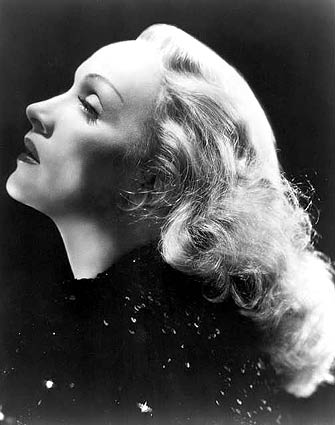
Marlene Dietrich in the 1940’s.
In a moment, I grabbed Mom and pulled her aside and asked her just exactly when she planned to tell me that we were cousins of Marlene Dietrich; I was 40 years old, and she was 65 and I was completely unaware of this connection. She said “never” – she just didn’t think it was important. Her father, Paul Felsing, my grandfather, was Marlene’s cousin on Marlene’s mother’s (Josephine Felsing) side. “We just think the sort of things she did were not always in the best taste,” she said.
Of course, by 2000 Marlene had already been dead eight years, having spent the last years of her life as a recluse in Paris. She died there in 1992 at age 91. After her death her body was returned to Berlin, where she had grown up. She had been on the outs with the Germans for years because she was so outspoken against her own people for their fascism in the years leading up to World War 2. Hitler tried to force her to come back to Germany from the United States, but she refused. Instead, she worked with other women to support the United States and went to the front lines to perform for American soldiers when they were stationed throughout Europe. At the time of her death her body was returned to Germany where the Germans turned out in great numbers to honor her and throw flowers on her casket as the procession went through the streets.
It turned out that I didn’t know enough about Marlene, so I bought a biography and any other information I could get my hands on, and sure enough, her family tree includes my great grandfather. She was – as my family put it – a “bad girl” because she was a feminist who smoked, wore both men’s and women’s clothes, slept with both men and women, maintained an unconventional marriage, worked in film, was a savvy businesswoman, did exactly whatever she wanted, and “wasn’t really a Christian.” She was a woman who knew who she was, a woman who could stand on her own two feet in a patriarchy. Some of her extended family emigrated to South Dakota (where my grandfather was born) from Germany in the late 1800’s. Her family owned the Conrad Felsing Clock Co. in Berlin. My husband went online to investigate and found an old Felsing clock in Colorado, made for the Parisian market. It was carted over to the United States by a GI returning from World War 2. It sits on a desk in my home today, and it still works.

My Turn-of-the-Century Felsing Clock, designed for the Parisian market.
In the summer of 2010, I went to Berlin for the first time. Of course, there is nothing left of the Conrad Felsing Clock Co. store at 20 Unter der Linden avenue where Josephine Felsing, Marlene’s mother, was living when the war ended, but nonetheless I tried hard to imagine what it must have been like to live in Berlin in the early 1900’s when she was there, having watched all the Marlene films and documentaries I could find. Eventually I walked down to Potsdamer Platz where the Marlene Dietrich film museum is located and spent a great deal of time going slowly through, looking at movie clips, clothing, and accessories and reading personal notes of hers. She was a lot taller than I imagined, and incredibly beautiful.
And what an interesting and full life Marlene had! She was ambitious and unusual, smart and accomplished, and to call her a “bad girl,” as my older relatives did, diminished the complexity of her life and the contributions she made to society, culture, and the world. After the museum, we wandered down to the gay neighborhood around Nollen Dorf Platz in Schonberg (where she is buried), Here she performed in one of the local bars in her twenties, and we explored that area too. So much history there! The writer Christopher Isherwood stayed in that same neighborhood in the 1930’s and he must have known of Marlene. His “Berlin Stories” are based on his experiences there and are, of course, the basis for the musical “Cabaret.”
In 2005 I sat for a portrait with Don Bachardy – Christopher Isherwood’s artist partner – in Santa Monica. Don had been introduced to – and painted a portrait of – my partner, Kevin, back in 1999; they had a mutual acquaintance who introduced them. Don happily agreed, per Kevin’s request, to paint me as well when we visited Los Angeles. So, I spent a day in Isherwood and Bachardy’s house and art studio, completely ignorant of the fact he had drawn Marlene Dietrich’s portrait too at the same place way back in 1963 when I was just 3. Later we had dinner at a little diner down the street that you can see in the movie “A Single Man,” a film based on the book of the same title by Isherwood. Don Bachardy is a really interesting and kind man, and an amazing artist. He is very old now, and Chris has been gone for many years, as he was much older even than Don. Anyone interested in the lives of these individuals can get the documentary “Chris and Don” through Netflix, as well as at least two good documentaries about Marlene.

Christopher Isherwood and Don Bachardy.
The photo of Chris and Don at left is, of course, old. Living life as an out gay couple at the time this photo was taken was not easy and was fraught with potential danger. They had some security because of their connections and work, but they still had to be careful. The gay community was mostly hidden. My father had a first cousin who died in 1979 who was in his late 70’s; he was a gay man and very accomplished – an author, artist, musician, and more, who had traveled the world. Did I know him? No. I was never allowed to meet him! I knew nothing about him until he died and then was given only sketchy information because his gay life was just something not talked about, and the family found it embarrassing. It’s upsetting, frankly. Most of his papers were destroyed, and only fragments remained in his home of his art, books, diaries and letters – just enough to convince me that knowing him would have enriched my life. I eventually tracked down all that remained of his legacy at the University of Iowa’s historical archives, obtained one of his paintings, read his diaries and letters, and found a person – Gretchen Spencer – in Des Moines, who knew him and had spent a good deal of her life trying to reconstruct the history of his life. After my research, I wrote up a biography of my findings, which you may now see on this site, entitled “Artist Lee Ver Duft 1910-1985.”
Lives touch and reconnect across time and generations; how often we don’t know the connections or importance of certain events and experiences until much later! And how often we don’t know what we missed or lost entirely! I am fortunate to at least finally know as much as I do, and incredibly fortunate to have met Don Bachardy – a direct connection to Marlene Dietrich – an artist who met us both and captured us on paper 42 years apart.
In 2015, my husband Kevin, a professor of English and a Critical Theorist, was asked to write an article for The London Review of Books about the new book, “Hollywood,” by Don Bachardy. The book is a compilation of drawings of Hollywood stars by Don Bachardy from throughout the decades of the twentieth century, a book that, of course, includes the original drawing of Marlene Dietrich. Here is the link to Kevin’s article: https://www.lrb.co.uk/the-paper/v37/n07/kevin-kopelson/all-about-me. It is pertinent to this story.
 Coz
Coz 