
Baobab Bonsai

You have to admit, this is a very weird looking tree, the Baobab. There are six species in Madagascar, two in Africa, and one in Australia. They inhabit flat, arid, low-lying regions. The trunk of this tree can absorb and hold an enormous amount of water for an extended period. The trees are deciduous, as they lose their leaves and go dormant for part of the year during the dry season, which starts in the fall and extends over the winter in their native lands. They have long lives – over a thousand years potentially. They can only grow in deep tropical environments, as even a temperature of fifty-four degrees F is too low for them. Mythologically, the story of how they got their peculiar shape is that “the devil plucked the baobab tree out of the earth, turned it upside down, and jammed it top first back into the ground, leaving the roots in the air.”

Above is a young Baobab tree in a Bonsai pot. Here, in miniature, it is confined and has grown into a tiny version of the regular enormous Baobab that exists in the wild. I think it is an interesting tree visually in either form. I’d like to have a Baobab, but the only way I can possibly do it in Connecticut is in the form of a Bonsai.
So how can one get a Baobab tree to Bonsai? Well, you can order seeds online, much to my surprise. They are typically shipped in a bunch of ten, as a percentage are duds and the initial survival rate for the seedlings is only about one in three. To find the duds, the seeds are poured into a glass of water; those that float are no good. The remainder are kept.
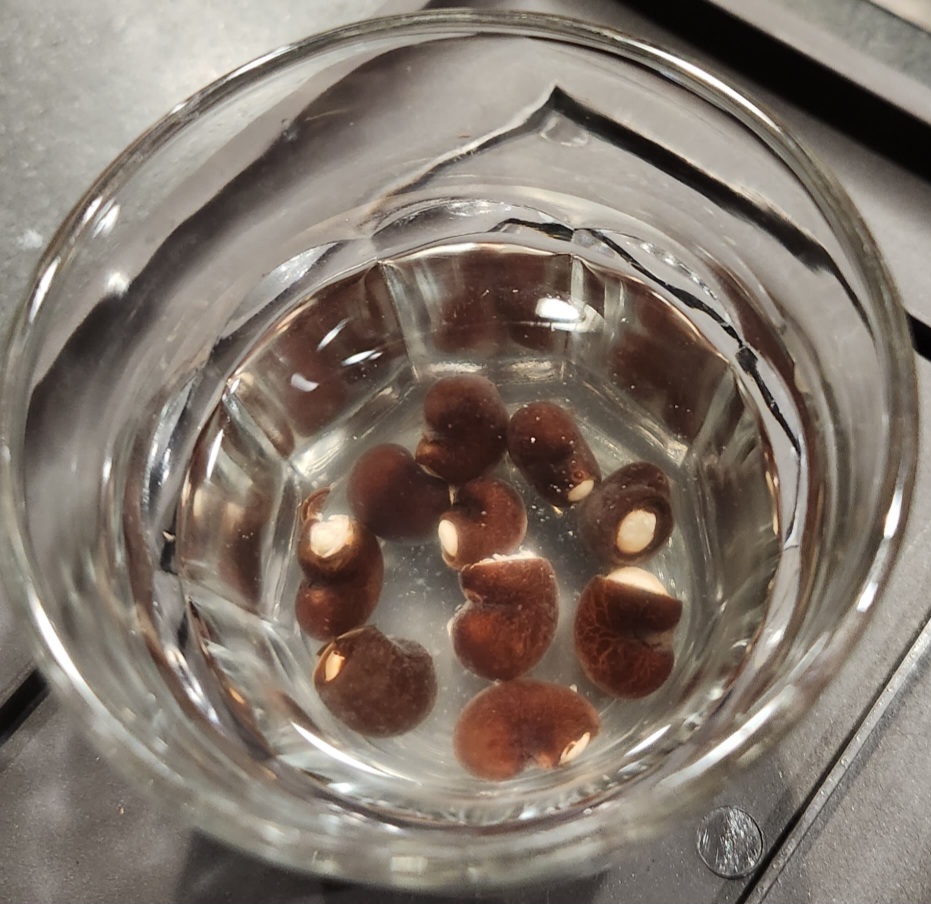
The process of getting the seed started is complicated, as the seeds of the Bonsai are as strange as the tree itself. Each seed has a black, thick, hard coat surrounded by a second softer brown coat. It takes a long time for the seed embryo to work its way out of the outer hard coat to germinate, months and months, and only when the conditions are just right. This is too long a wait for most people to tolerate for a specimen tree, so a way was found to force germination much more quickly. The process requires soaking the seeds for three days in a glass of water, then filing or cutting the seed coats back on one end until you can see a small sliver of the white seed embryo. Then you put it back in a glass of water for 2-3 days during which time the seed will swell and soften from within, thanks to the hole in its coat. Below is a photo of my soaking Baobab seeds. I used a Craftsman wire cutter to nip off the seed coat to expose the white seed interior before putting them in water. They began to swell quickly, and after two days they were ready to peel, using my thumbnails. Quite easy, really.
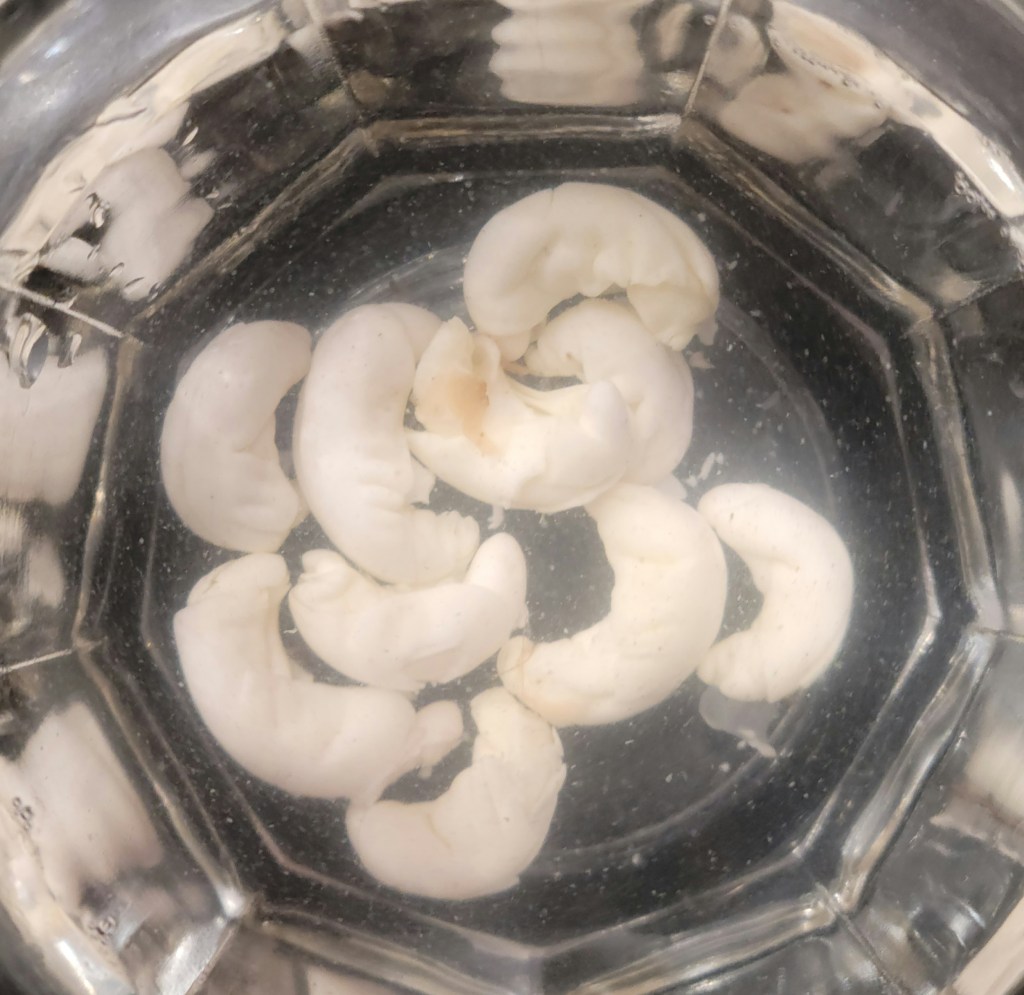
Below are the baby tree embryos which have been removed from the seed capsule. They will soak for one more day in this bath before transfer. One end of the embryo is a pair of cotyledons – the leaf like structures that open to feed the new tree as it sprouts. You see them on beans when they first come up, so I know you’re familiar with cotyledons even if you don’t know what they are called. On the other end of the embryo is the root stub. The embryos began enlarging almost as soon as they were released from the seed hull. As you can see, they look weirdly like insect larvae, or grubs.
After soaking for a day, the embryos are placed between layers of moistened paper towels in a warm place in the house for another 2-3 days or so, during which time they begin to sprout. Once the little root is seen and the sprouting embryonic leaves are reaching up, the baby is planted an inch deep on its side in moist potting soil and kept in a warm place. Within fourteen days, the two leaf-like cotyledons will emerge from the soil, followed soon by the new growing stem of the tree. In the photo below you see the two big leaf-like cotyledons, and between them, way down deep, just the hint of two tiny new leaves coming up on a stem.
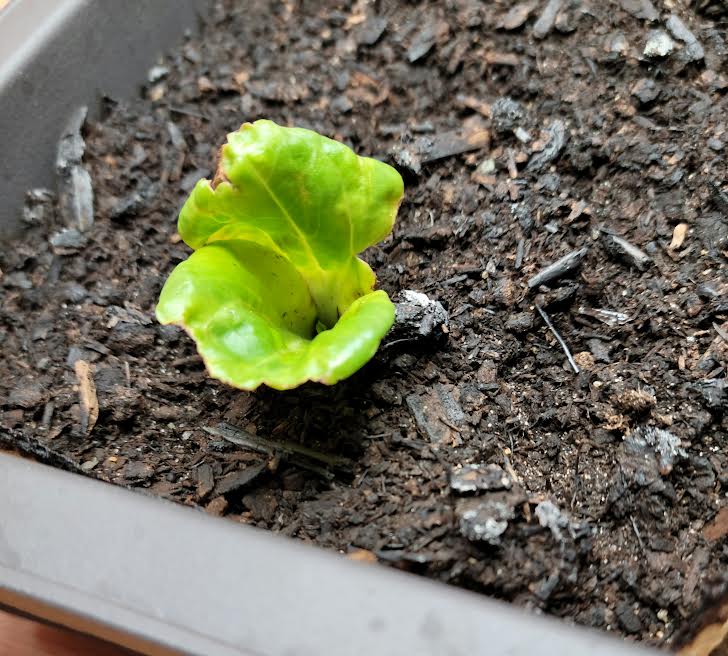
This little baobab tree is in a “training” pot made of plastic. Training includes regular root and branch trimming, and when necessary, wiring of the branches to make the tree look like the sculpture you want. When it is bigger and more well established, training will begin, and eventually it will be transferred to a larger and deeper ceramic pot where it will live permanently.
If my bonsai experiment works out, you will see new photos as the tree develops. In the meantime, I will be trying bonsai with other types of native and ornamental trees from the Northeast. Hopefully I will have a cool collection soon.
 Coz
Coz 