
When the Doctor is the Patient
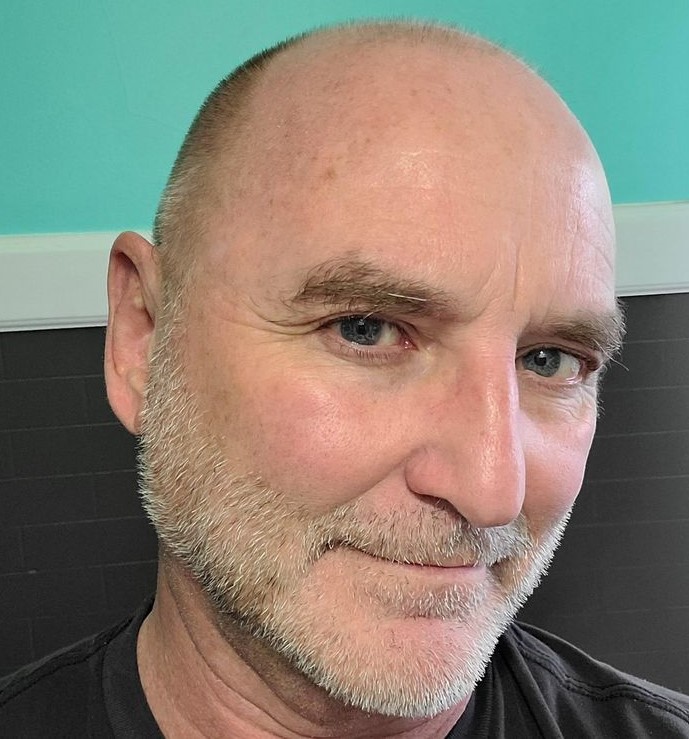
I don’t like being a patient. Never have. I just don’t have time for it – I have much better things to do than have something wrong with me. That said, as a rule, I am a “good” patient when I have to be one. I have my own opinions about how active a person can be after surgery, though, so I don’t usually follow the “rest” directives given by the surgeon. I’ve always thought the quicker one gets back on their feet, the better – being a bit careful, of course.
My first major experience with the medical system was at age 19 when I had an open appendectomy. I was filleted like a fish by an old general practitioner in a rural hospital. He had a senile tremor, so his hands shook like a leaf. I wondered how he could work on me with such shaky hands. Afterward, we had a battle because the doctor said I had to drink before they would discontinue my IV, but I was peeing every five minutes because of that IV. I told him I wasn’t drinking a drop until he removed the IV – my bladder was sick and tired of working so hard. He doubled down and said he wasn’t going to remove it until I drank. So, there we sat, butting heads. I told him I’d take the damned thing out myself. My mom was sitting there and was horrified that I was sassing the doctor, but I didn’t care. I got up and marched to the bathroom to pee for the millionth time, gown wide open, ass fully exposed, further freaking my mom out. Finally, I talked the nurse into giving me one glass of juice in exchange for removing the IV. We compromised, I guess. We all felt like we won. I was stuck in there for a good five days. I was ready to leave at two! As soon as I got out of the car at home I went straight to the barn where my dad was roofing, climbed up the ladder, and started nailing in the corrugated tin panels. It hurt a bit, but I was careful, and I wouldn’t have had it any other way. I got better quickly, and I think it was because I decided to get up on that barn. It was a sign of my attitude toward being laid up.
Years later a disc ruptured in my lower back while I – now a doctor – was in the middle of performing a major operation on a patient. There was no one available to take my place, so I simply had to grit my teeth and keep working in spite of the severe burning pain going down my leg. I finished the case and went straight to radiology for an urgent CT scan, followed by an urgent epidural injection to provide some pain relief – it was bad. Two days later I had an urgent partial discectomy with facet bone removal. The next day I woke up with a mostly paralyzed right leg. “Well, shit,” my neurosurgeon said when she made rounds. “This almost never happens.”
At least my pain was gone, what a relief. “Will I get better?” I asked. “I don’t know,” she said. “Either you will, or you won’t. Time will tell.” I was just 44 years old. “I’m going home then,” I said, and off I went, less than twenty-four hours after being admitted.
I had no time for having a paralyzed leg, I decided. My son bought me a dragon cane while I was away, and he happily presented it to me when I got home. There was a sword inside. Good! A weapon, just what I needed to fight off infirmity.
The leg wouldn’t work. I swung it around enough to use it as a sort of peg-leg, like a pirate, using the dragon cane when necessary. I was neither happy nor sad, just bemused, even though it appeared my career in surgery might well be over. I studied the leg as I traversed down the stairs the next morning to get coffee. “Stupid leg,” I muttered to myself.
I went to the gym the next day and gimped around, even though the neurosurgeon had told me I had to wait three weeks. I tried out the leg extensions. I normally could do 150 pounds per leg on that machine, but now I could only do 5 pounds with the right leg. I had almost no working quads, and my glutes were weak as well. I managed to do most of my regular workout in spite of the leg. The next day I did the same, and the next day, and the day after, and little by little I began getting some strength back. I waited six weeks, and then went back to work, first just doing easy things like scopes and hand surgeries. Over the next year I gradually got back to all of my normal work, albeit with half the hours and with accommodations in the operating room. I ditched the cane after the first six weeks. I willed my leg to work, kept my posture as perfect as possible, and tried to walk smoothly like a dancer everywhere I went. It was slow going, but after two years I had only a barely perceptible limp.
And then the disc partially ruptured again, assuring my fate of never getting completely better. I modified my work schedule permanently then and kept going anyway. People needed me.
Other things have happened, other surgeries, other conditions. Doctors are not immune to illness. By the time I was in my early sixties, I just had to stop being a surgeon. It was the combined stress of my career, not just the physical stress that led to that decision. I was physically and spiritually exhausted. Within months of retirement, I looked and felt better than I had in over a decade. My boys thought I had aged backwards. That’s over now, I think – one can only age backwards for so long.
I’ve had bad experiences as a patient. Not with actual treatments, but with providers. The first time was with the appendectomy when my doctor wouldn’t listen to me. He was making my bladder explode and wouldn’t consider my viewpoint. I was just a dumb farm kid, after all. “The doctor knows best.” The second time, though, I was 57. I needed a heart catheterization, having unfortunately inherited my dad’s predisposition for coronary artery disease. I was sent to Mercy in Des Moines for this procedure, to be performed by an interventional cardiologist who I had heard of but never met. The nurses prepped me in preop and said the cardiologist would be by in a few minutes. He appeared, picked up my chart, confirmed my name, looked at the indication for the procedure and simply said “We’ll be starting in a few minutes.” That was it. No greeting, no introduction, no opportunity for questions – nothing. I could tell he had not bothered to look at my chart until just that minute. He turned to walk away. “Hold the phone!” I said. “I have some questions.” He turned, exasperated, but didn’t approach the gurney. I then proceeded with my questions, one after another. Pretty soon he began to get the idea that I was more medically savvy than most of his patients, but he remained irritated. Had he looked at my chart, he would have known that I was also a physician – but that fact shouldn’t have made any difference on how he treated me. His failure to engage me properly from the start was a grotesque example of how doctors should not behave. After a bit, due to his obvious ongoing irritation, I finally told him I was also a physician, and then all of a sudden everything changed. He pulled up a chair and sat down, finally, and managed to hide his annoyance and have a conversation with me. But I told him exactly what I thought about how he had presented himself. He replied that he was the best invasive cardiologist in the Midwest, as if that should be qualification enough to allow him to be an asshole to his patients. I wasn’t having it. “You will sit there and answer my questions until I am done,” I told him. “Otherwise, I am taking out this IV and walking out the door.” So, he sat there while I tortured him with questions. He squirmed the whole time.
This should not happen to any patient. I moved recently, and now I have to find all new providers. The whole system here is different, with lots of emphasis on specialty treatment rather than management by family physicians. The care is fragmented and there are too many appointments to deal with. And three times now, with different specialists, I’ve been talked to as if I’m an idiot, been hurried through the appointment, and given wrong information to boot. And once again, no one asked me any questions to figure out who I am. They just made an assumption based on the diagnosis that was used to justify the appointment. It’s as if I am just a diagnosis, not a person. I let them go on for a while at each appointment, just to see how long it would take them to figure out they were being judged, but they never figured it out. After about five minutes, in each visit, after correcting various mistakes they were making about my diagnosis and reason for being there, I finally said, “I’m a physician, you know,” knowing that they didn’t know. And then all of a sudden, they listened to me and what I had to say about my past and current medical history and why I was there. In every case, they had it wrong until I corrected them. These were Harvard, Yale, and Stanford doctors. The best, supposedly.
The proper way for a doctor to enter a room and greet a new patient is with a smile, an introduction, and a query about why they are there. They should already have reviewed the patient’s chart and already know the answer, but they should hear it directly from the patient. Then, the doctor should say, “Okay, we’ll get back to that in a minute, but please tell me a bit about yourself. I want to know about your background, education, career, and family.” This sets the tone right away for rapport and trust and indicates to the patient that the provider is actually listening and recognizes that who you are matters. Once the provider knows more about the patient, they can tailor the interaction to fit the patient. I cannot emphasize enough how important this is!
From now on I am simply going to tell the first person who takes me into a room that I am a physician. I shouldn’t have to do this, and it makes me wonder how in the world do non-medical people manage at their doctor’s office or at the hospital. I think it’s safe to assume that many patients are being talked to as if they are children.
I know I wasn’t a perfect doctor. Some days I was definitely crabby or impatient. One day a patient complained to my nurse that I had failed to introduce myself when I came into the room. I had assumed it wasn’t necessary; who else would I be if not the surgeon they came to see? I realized I shouldn’t make such assumptions; I’m just a man. I could be a nurse, an assistant, a tech – how would you know? A nametag would help, but what if the patient has poor vision, or the tag is obscured? They shouldn’t have to even think about it! I should have introduced myself. But I would like to think that the vast majority of the time I took a minute to introduce myself, touch bases with the patient, make sure the chart documentation was correct, make sure I was accurately understanding their report, and assuring them I had understood the problem and understood them as a person. This seems like it should be the bare minimum for a doctor’s appointment.
Another problem is appointment frequency. I have a new cardiologist. She seems great. But she wanted to make another appointment to see me in six months after our initial visit. It’s a three-hundred-dollar follow-up appointment. I told her no – I would see her in a year. It’s been nearly three years since I had heart stents placed, I have no new symptoms, by blood pressure and EKG are normal, and my exercise tolerance has steadily improved. What was the point? What will she do if I’m just the same then as I am now? “Nothing,” she replied. “So, I would be paying for a “nothing” visit, an unnecessary visit. I could make the argument that even a visit at a year is unnecessary if I’m feeling well,” I said. She pondered my observations for a second and then agreed. “You know your body,” she said.
I also know my pocketbook, and like most retirees, I have to keep an eye on it. It can be expensive to go to the doctor even with insurance. And beyond that, I don’t want my world to revolve around doctor’s appointments. What sort of social life is that? I see my dentist four times a year, the Ophthalmologist twice per year, the optometrist once per year, the endocrinologist twice per year, the cardiologist once per year, the primary care doctor once per year as a routine. On top of those eleven visits will be others, such as urgent care for an unexpected illness, the dentist for filling a cavity, the pharmacist to pick up meds, or any number of other providers due to the development of some other new symptom that has to be chased down, and I’m in relatively good health for a guy my age! I would say I will be lucky if I have only twenty medical visits per year! In my younger years, from age five to forty-four, I saw only an optometrist annually. I saw a primary care doctor only once every few years. The older people in my practice often complained to me that “all they ever did anymore” was go to a doctor’s appointment. I totally believe them.
I often thought about the imposition of loss of time and money on my older patient population due to doctor appointments. Some couldn’t drive well. Some couldn’t afford gasoline. Some were disabled, making it difficult to arrange transportation. This always bothered me. As often as possible, if someone called in with a question about their health, I would take care of it over the phone. If they had a problem other than the surgical one I was seeing them for, I would take care of that as well to save them a trip to another provider or urgent care clinic. I would often set up phone appointments, and later in my career, video calls so the patient would not have to travel to see me if it wasn’t absolutely necessary. I even made house calls and nursing home calls on the regular for consults, wound care, and so forth. I did whatever I could to make access to health care possible for my patients.
In many ways, I think, practicing Medicine in a smaller environment is so much more practical, as is focusing on primary care. That means that the primary care providers have to be broadly trained and the specialists who work with them must communicate effectively and use the primary care provider to deliver as much specialty care as they can. The specialist should act as a consultant for the patient initially and then as a guide for the primary care provider as much as possible. Visiting specialists can certainly make a difference too for patients with transportation, financial, or disability issues by coming closer to where the patient lives.
The model we used at UnityPoint Grinnell Regional Medical Center in Grinnell, Iowa, was – in my opinion – nearly ideal. Almost all the doctors/providers lived in town, and everyone who lived in the region knew who they were and often saw them around town. We had a common community, and we answered to each other. The model was primary care focused, with general specialists in-house, and visiting subspecialists coming in on a regular basis. The providers were easily able to access the general specialists in their clinics, and there was a sense of camaraderie amongst them. Since we and the patients all lived in the same town, we had to answer to each other. I don’t know exactly how to translate that into an urban environment, but I’m appreciative of those who are thinking about it and trying new things, like video appointments. Meanwhile, I’m very grateful to have had my career in Grinnell. What a great place to work! Just the right size, and great people all around who understood their mission and their role in the community and hospital. Everyone in the Grinnell area should be very proud of their little powerhouse of a hospital and the caring staff and providers who work there. The place is a gem. Or, ahem, for those in the know – a jewel.
 Coz
Coz 